
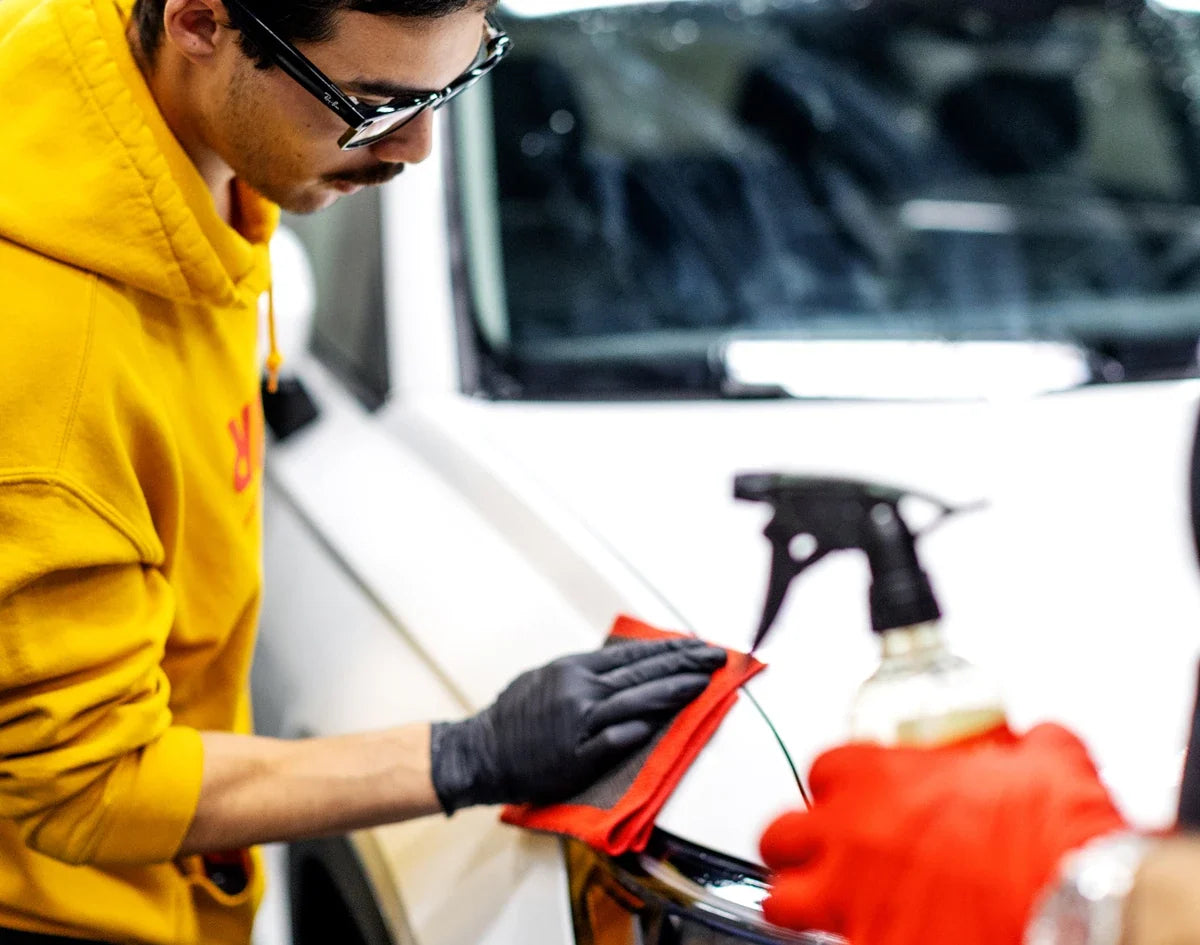
What Is Used for Paint Correction? Essential Products and Tools Explained. Swirl marks, light scratches, oxidation, and dull paint can make even a well-maintained vehicle look older than it is. Regular washing removes dirt, but it won't correct imperfections in the paint's clear coat. That's where professional paint correction products make a difference.
Paint correction is the process of using specialized polishing compounds, finishing polishes, machine polishers, and buffing pads to reduce or remove certain paint defects. When performed correctly, it can restore clarity, improve gloss, and reveal a smoother, more reflective finish.
At TOC Supplies, we offer auto detailing supplies for professional detailers and DIY enthusiasts across Canada. Whether you're correcting your first vehicle or refining your professional detailing process, choosing the right products is essential to achieving consistent results.
What Products Are Used for Paint Correction?
The essential paint correction products include polishing compounds, finishing polishes, buffing pads, machine polishers, paint decontamination products, microfiber towels, and panel preparation cleaners.
Each product serves a different purpose. Using the correct combination helps remove imperfections while minimizing unnecessary clear coat removal.
A complete paint correction process generally involves cleaning, inspecting, polishing, refining, and protecting the vehicle's finish.
Essential Paint Correction Products and Tools
1. Cutting Compounds for Removing Paint Defects
Cutting compounds contain abrasives designed to remove a controlled amount of material from the painted surface.
They are commonly used to address:
-
Moderate swirl marks
-
Light to moderate clear coat scratches
-
Oxidation and surface dullness
-
Certain water-spot etching
-
Paint defects requiring more correction than a finishing polish can provide
Compounds vary in aggressiveness. Selecting the appropriate product depends on the paint's condition, hardness, and the desired correction level.
Always begin with a test spot and the least aggressive combination capable of achieving the required result.
2. Finishing Polishes for Gloss and Clarity
After heavier correction, a finishing polish can help refine the paint and improve its appearance.
Finishing polishes use finer abrasives to reduce light haze, micro-marring, and certain polishing marks.
For vehicles with relatively minor imperfections, a finishing polish may provide sufficient correction without requiring a more aggressive compound.
The goal is to achieve the desired finish while preserving as much clear coat as possible.
3. Buffing Pads for Paint Correction
Buffing pads work with compounds and polishes to control the correction process.
Common options include:
Microfiber cutting pads: Often used when additional correction capability is required.
Foam cutting pads: Available in different levels of firmness and cutting ability.
Foam polishing pads: Designed for moderate correction and paint refinement.
Finishing pads: Used with suitable finishing polishes to improve clarity and gloss.
Pad performance varies by manufacturer, material, machine, and polish. A pad's colour alone doesn't reliably identify its cutting ability across different brands.
Choosing the right pad is just as important as selecting the correct polishing compound.
4. Dual Action and Rotary Polishers
Machine polishers help distribute polishing abrasives across the paint surface.
Dual action polishers combine rotation with an oscillating movement. They are popular with professional detailers and DIY enthusiasts because they can provide controlled correction with a generally more forgiving operating method.
Rotary polishers use direct rotation and can provide substantial correction capability, but they require greater experience to manage heat, friction, and polishing marks.
For beginners, a suitable dual action polisher is often a practical starting point.
Regardless of the machine, proper technique, pad selection, and paint inspection remain essential.
5. Paint Decontamination Products
Before polishing, the vehicle must be thoroughly cleaned.
Contamination left on the paint can become trapped between the polishing pad and the surface, potentially creating additional defects.
Depending on the vehicle's condition, preparation may involve:
-
Automotive shampoo
-
Iron remover
-
Tar remover
-
Clay bars or synthetic clay alternatives
-
Suitable microfiber drying towels
Decontamination should be performed carefully because mechanical methods can introduce light marring.
A clean surface allows you to evaluate the paint more accurately before beginning correction.
6. Microfiber Towels and Panel Preparation Cleaners
Quality microfiber towels help remove polishing residue without unnecessarily scratching freshly corrected paint.
Use clean, appropriate towels and replace them when contaminated.
Panel preparation cleaners may also be used to remove polishing oils and residues before applying certain paint protection products.
Always follow the manufacturer's instructions and confirm compatibility with the intended surface and protection system.
What Is Included in a Professional Paint Correction?
A typical paint correction process follows several important stages.
Step 1: Thorough washing
Remove loose dirt, road film, and surface contamination.
Step 2: Paint decontamination
Address bonded contaminants that could interfere with polishing.
Step 3: Paint inspection
Use appropriate lighting to identify swirl marks, scratches, oxidation, and other imperfections.
Step 4: Test spot
Evaluate a small section using an appropriate polish, pad, and machine combination.
Step 5: Machine polishing
Correct suitable paint defects while avoiding unnecessary material removal.
Step 6: Paint refinement
Improve clarity and gloss where additional finishing is needed.
Step 7: Paint protection
Apply an appropriate wax, sealant, or ceramic coating after completing the required preparation.
Not every vehicle requires multiple polishing stages. The correct approach depends on paint condition and the desired result.
Can You Do Your Own Paint Correction?
Yes. DIY paint correction is possible with suitable equipment, product knowledge, and careful technique.
However, paint correction is not the same as applying wax or washing a vehicle.
Machine polishing removes a small amount of material from the paint system. Excessive polishing, incorrect pad selection, or improper machine handling can cause damage.
Beginners should practise on a suitable test panel, follow product instructions, and avoid aggressive correction without understanding the risks.
Deep scratches, damaged clear coat, and certain paint defects may require professional assessment rather than additional polishing.
What Do Professional Car Detailers Use for Paint Correction?
Professional detailers commonly use a combination of machine polishers, specialized compounds, finishing polishes, and different buffing pads.
They also rely on inspection lighting, clean microfiber towels, surface preparation products, and a consistent correction process.
The difference isn't simply owning more expensive equipment. Professional results depend on matching the tools and products to the condition of the paint.
For detailing businesses, product consistency, efficiency, pad durability, and cost per application can also influence purchasing decisions.
Why Choose TOC Supplies for Paint Correction Products?
Finding suitable paint correction supplies shouldn't require guessing which products work together.
TOC Supplies serves professional detailers and DIY car care enthusiasts looking for products to clean, correct, refine, and protect automotive finishes.
Our selection of automotive detailing supplies supports different stages of the process, from surface preparation and polishing to final paint protection.
Customers can shop online across Canada or visit TOC Supplies in Maple, Ontario.
Whether you're building a beginner's polishing setup or purchasing supplies for professional detailing work, start with products that match your equipment, experience, and correction goals.
Frequently Asked Questions About Paint Correction
What is used for paint correction?
Paint correction typically uses machine polishers, cutting compounds, finishing polishes, buffing pads, and microfiber towels. Washing and decontamination products prepare the surface before polishing, while suitable paint protection products help maintain the corrected finish afterward.
Can paint correction remove all scratches?
No. Paint correction can reduce or remove certain defects within the clear coat, but deep scratches that penetrate through the clear coat may not be safely removable through polishing. Paint thickness and defect depth should be assessed before correction.
What is the difference between polishing and paint correction?
Polishing is a process used to refine automotive paint. Paint correction is the broader process of assessing and reducing paint defects, often using one or more polishing stages.
Do I need a cutting compound and finishing polish?
Not always. Some vehicles require only a light finishing polish, while others benefit from multiple correction stages. A test spot helps determine the appropriate products and process.
Shop Paint Correction Products in Canada
The right paint correction products can help transform dull, swirled paint into a cleaner, glossier, more refined finish.
From cutting compounds and finishing polishes to buffing pads, microfiber towels, and paint preparation products, having the correct supplies makes every stage of the detailing process more effective.
Ready to improve your paint correction results?
Explore professional car detailing products at TOC Supplies and find the tools and supplies that suit your vehicle, polishing equipment, and experience level.
Shop Paint Correction Products at TOC Supplies
Available online across Canada and in-store in Maple, Ontario.